
As a homeowner, there aren’t many things worse than coming home to find dry, yellowing spots on your perfectly green lawn. When you lift up the sad tufts of grass, you can see fat, creepy grubs that are doing the damage. Leatherjackets are the larvae of crane flies that can do a lot of damage to gardens. They live underground and are not well known.
What Exactly Are Leatherjackets?
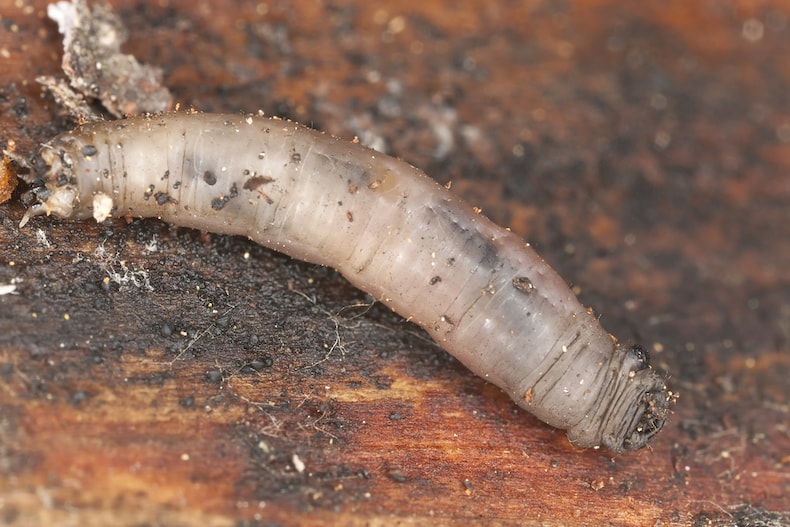
Leatherjackets, which are also called “daddy longlegs,” are the young stages of crane flies. There are about 350 species of crane flies in the UK, but only a few do a lot of damage to lawns and gardens. Leatherjackets are up to 30 mm long and have a long, grey-brown, tubular body with no legs. In their larval stage, they eat plant roots, especially turfgrass. In gardens, they mostly hurt lawns, but they can also hurt young seedlings.
The Crane Fly Life Cycle
- Adult crane flies emerge from August-October to mate and lay eggs in the soil.
- The eggs hatch into larvae a few weeks later.
- The leatherjacket larvae feed on roots through the fall, winter, and spring.
- By summer, mature grubs pupate into adult crane flies.
- Wet autumns and mild winters favor leatherjacket survival and damage.
Recognizing Leatherjacket Activity
Watch for these signs of leatherjacket damage
- Yellowish brown dead patches in lawns
- Grass lifts up easily from the soil in damaged areas
- Seedlings eaten through at soil line or collapsing
- Presence of grubs when digging in affected areas
- Birds like crows and starlings pecking the lawn hunting for grubs
Managing Destructive Leatherjackets
Biological Control
- Apply beneficial nematodes like Steinernema feltiae. Most effective above 54°F.
- Target lawn edges and hot spots early to stop spread.
- Apply September-October to kill young larvae.
Prevention
- Improve lawn drainage and aeration.
- Avoid over-feeding turf with nitrogen.
- Allow grass to grow longer to hide minor damage.
- Reseed damaged areas to keep lawn thick.
Manual Control
- Lay black plastic overnight to draw larvae up.
- Hand pick grubs for disposal.
- Encourage natural predators like birds and moles.
Chemical Control
- Insecticides containing carbaryl, imidacloprid, or trichlorfon can be used but should be a last resort.
The Role of Crane Flies in Ecosystems
While leatherjackets cause headaches for gardeners, most crane fly species are beneficial:
- Many adults don’t feed at all.
- Most larvae aid nutrient recycling by feeding on decaying organic matter.
- Some larvae prey on pest grubs and worms.
- Crane flies are an important food source for birds.
So despite the damage of a few species, these insects remain integral to local ecosystems. With some prevention and control, gardens can coexist with leatherjackets. A thick, healthy lawn is the best defense against occasional crane fly chaos!
How to Spot Leatherjacket Activity
Keep an eye out for these signs of leatherjacket damage:
-
Brown or yellow spots that don’t match up: This is dead grass from larvae eating the roots. The spots get bigger as the damage spreads.
-
Loosely anchored grass – Damaged areas will lift up easily from the soil as root systems are eaten away.
-
Birds scratching the grass—Crows, starlings, and other birds may make small holes in the grass to find juicy leatherjacket grubs.
-
Collapsing seedlings – Young plants are vulnerable and may be eaten through at soil level and topple over.
-
Presence of grubs – Dig down an inch or two in damaged patches to reveal creepy, fat grey-brown leatherjacket larvae.
Smart Leatherjacket Prevention
An ounce of prevention is worth a pound of cure when it comes to managing leatherjackets:
-
Maintain proper lawn care – healthy grass recovers better from damage.
-
Reduce thatch buildup – eggs thrive in thick turf mats.
-
Avoid over-fertilization – excess nitrogen favors larvae.
-
Allow longer grass – helps mask minor grub damage.
-
Apply beneficial nematodes – targets young grubs before damage starts.
-
Improve drainage – leatherjackets thrive in consistently wet soil.
-
Reseed bare areas – stops damage spread by keeping turf thick.
Battling Established Leatherjacket Populations
If leatherjackets have already caused significant lawn damage, treatment options include:
-
Cover grass overnight with black plastic – forces larvae up where they can be collected.
-
Manually dig out grubs – labor intensive but avoids pesticides.
-
Apply carbaryl, imidacloprid or trichlorfon – insecticides effective on larvae but use judiciously.
-
Encourage bird predators – allow crows, starlings, robins to feast on grubs.
-
Introduce beneficial nematodes – Steinernema feltiae parasites provide biological control.
-
Improve aeration – helps dry out soil and exposes grubs to predators.
-
Add compost top-dressing – beneficial microbes compete with and repel larvae.
Coexisting with Leatherjackets
While leatherjackets frustrate gardeners, these crane fly larvae provide ecosystem services:
-
Most species aid in organic matter decomposition and soil nutrient recycling.
-
Some larvae act as beneficial predators of other insect pests.
-
Crane flies are an important food source for birds and other wildlife.
So despite the damage caused by a few species, leatherjackets remain an integral part of the natural landscape. By taking some preventative measures and dealing with heavy populations promptly, gardens can withstand occasional leatherjacket infestations with minimal long term impact. With a healthy lawn and timely action, leatherjackets don’t need to spell doom for your garden!
You will also need
In general, treat when larvae are present and actively feeding, in late April until mid-June and again in early August through October (varies slightly by geographical location).
Best applied when lawn is wet. Time applications around rainy periods or water lawn prior to application.
Step 1 Remove sprayer lid.
Step 2 Open nematodes tube and place the pouches in the sprayer. To avoid clogging the sprayer, do not tear or open the pouches when placing into the sprayer.
Step 3 Activate nematodes by adding about 2. 5 cm (1 in) of warm water in the sprayer. Activated nematodes are sufficiently small so that they will pass through the mesh of the pouches.
Step 4 Add room temperature water to fill sprayer bottle.
Step 5 Fasten lid securely and shake vigorously to evenly disperse nematodes. Activated nematodes are sufficiently small so that they will pass through the mesh of the pouches.
Step 6 Attach garden hose to sprayer and turn valve to “Mix” position to begin spraying.
Step 7: Begin spraying in the lawn’s worst-affected area and work your way out to cover the whole area with nematodes. Nematodes are heavier than water, so they will sink to the bottom of the bottle if you don’t move the spray solution around a lot while you use it.
Step 8: Keep the lawn wet for the next three days (or one week if it’s dry) to make sure that nematodes get into the root zone, where feeding larvae are.
- Nematodes work best when the soil is between 10 °C and 30 °C (50 °F and 86 °F).
- Nematodes are easily killed by UV light, so they should only be used at night or on cloudy days.
- Nematodes are living things that need to be used right away.
- Do not store open packages (use all at once).
When spraying is complete and the sprayer is empty, there will be leftover in the pouches. These pouches can be placed in the composter or disposed of with regular garbage.
- Nematodes should not be kept in water, a bag, or a container.
- Keep out of direct sunlight.
Organic active ingredients posing no threat to the health of animals, pets or the environment.
Organic ingredients called nematodes.
LeatherJacket Grubs – Crane fly larvae
FAQ
How to get rid of leather jacket crane fly?
Biological control is available in the form of nematodes, which you water onto the turf or soil. The nematodes infect leatherjackets and other soil-dwelling invertebrates with a bacterial disease, which could affect other organisms as well as your target species.
Are leather jackets the same as crane flies?
Leatherjackets are the larvae of the European Crane Fly or ‘Daddy Long Legs’, as they are commonly known. The larvae cause damage to lawns by feeding on the roots of grass plants. Adult crane flies hatch from pupae in late July and August.
What kills leather jacket grubs?
There is a professional pesticide product to help control Leather Jackets, called Acelepryn, which can be applied by a qualified professional at certain times ….
What is the best treatment for leatherjackets?
You can get rid of leatherjackets with Nemasys Leatherjacket Killer instead of using dangerous chemicals and taking all the safety precautions that come with them. Nemasys Leatherjacket Killer is incredibly effective and is 100% safe for children, cats, dogs, other pets and wildlife.