
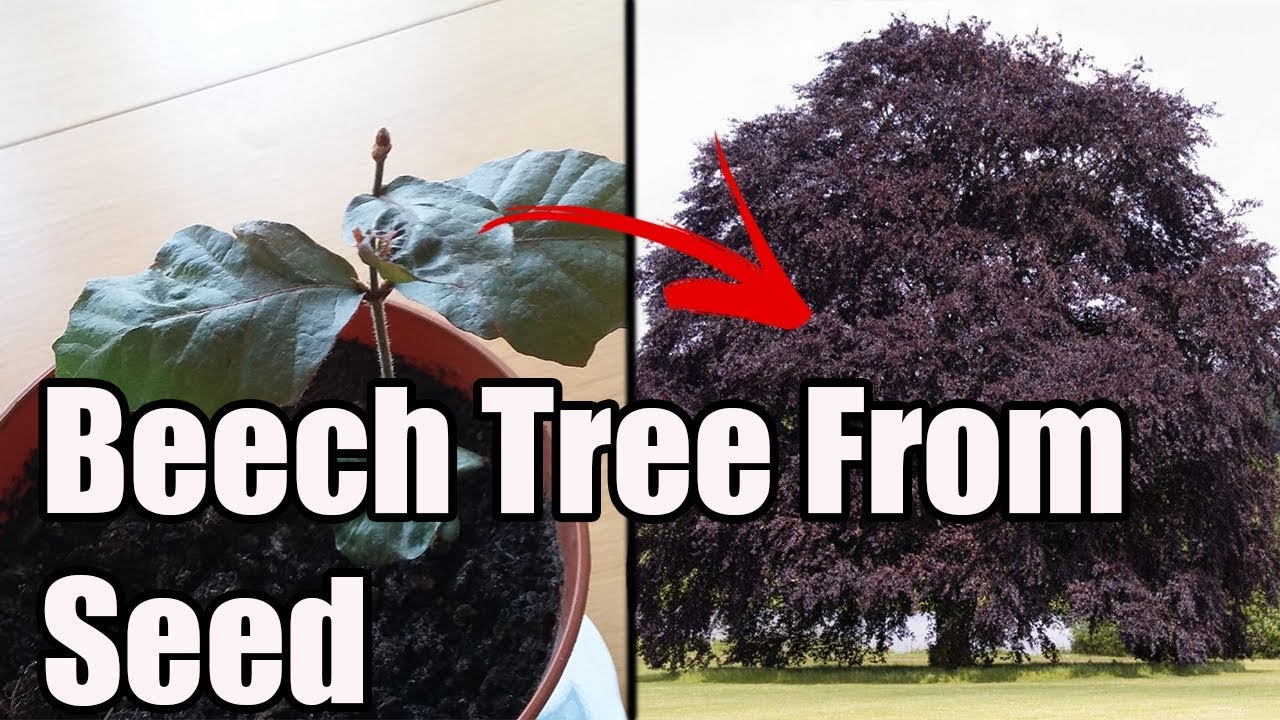
Beech trees are stately, large deciduous trees that can grow over 100 feet tall. Their smooth silver bark and brilliant golden fall foliage make them prized ornamental landscape trees. Beech trees also produce edible nuts and have uses for lumber and firewood. Growing beech trees from seed can be an affordable way to produce many new trees for your property With some simple steps, you can successfully grow these beautiful trees
Collecting and Storing Beech Seeds
The first step is to gather fall-ripe beech seeds. Find brown beechnuts that have already fallen from the tree. Get them off the ground before squirrels and other animals do. Under well-known beech trees in parks or wooded areas are good places to look for seeds.
Store the seeds over winter in a cool, moist place like a refrigerator crisper drawer. Mix them with slightly damp peat moss or sand in a sealed plastic bag or container. The cold moist stratification mimics winter conditions and helps break their dormancy so they sprout in spring.
Planting Beech Seeds Outdoors
Once spring arrives, you can begin planting your stratified beech seeds directly outdoors. Choose a site with partial shade and moist, well-draining soil. Amend sandy or clay soils with compost to improve drainage. Rake away any leaves or debris and loosen the top few inches of soil.
Space seeds 8-12 inches apart in rows or groups. Plant them 1-2 inches deep, laying them on their side. Gently firm the soil over the seeds and water well after planting.
Cover seeded areas with wire mesh or other protections to deter squirrels and birds from digging up and eating the seeds. Remove any protections once seedlings become established.
Caring for Beech Seedlings
Keep the seed bed moist all the time until the seedlings come up, which should take about one to two months. Water gently to avoid washing away small seeds and seedlings. Put a thin layer of leaves or straw around seedlings to keep the soil moist.
Cut back beech seedlings that are too crowded to just a few strong plants per spot. Transplant extras to other areas or share with gardening friends. Leave at least 2 feet between seedlings to give them room to grow.
Control weeds which compete for water and nutrients. You can pull weeds by hand or cover them with organic mulch. Avoid using chemical weed killers near desired seedlings.
Transplanting Beech Saplings
After 2-3 years of growth, beech saplings will be ready to transplant to their permanent landscape positions. This gives them time to develop stronger root systems that can handle transplanting.
Choose a transplant site with partial sun exposure and fertile soil. Dig a hole twice as wide and just as deep as the sapling’s root ball. Carefully remove the sapling from its original spot, keeping the root ball intact. Set it in the hole so the top of the root ball is level with the ground. Backfill with native soil, tamping down gently to remove air pockets. Water deeply after transplanting and mulch around the base.
Stake taller saplings for stability until their roots establish. Prune only broken or dead branches at transplant time. Otherwise allow the sapling to grow naturally into its beautiful mature shape.
Long Term Beech Tree Care
With proper siting and care, beech trees can thrive for over 300 years. Prune only to remove damaged or crossed branches. Avoid heavy pruning that removes the tree’s naturally tiered branching shape.
Irrigate during droughts until trees become established. Mature beech trees are quite drought tolerant. Apply a balanced, slow release fertilizer annually if soils are infertile.
Watch for signs of beech bark disease, including weeping cracks or dull gray patches on the normally smooth silver bark. Promptly remove affected trees to prevent disease spread.
Growing beech trees from seed takes patience, but it’s a rewarding way to propagate these stunning trees. In time, you’ll enjoy their graceful forms, golden autumn color, and abundant nuts. With proper care, your homegrown beech trees can become a beautiful legacy that lasts for generations.
Step 1 – Collect Beech Tree Seeds
When collecting beech tree seeds, find a healthy beech tree that is growing within a 100 mile radius of where you will be planting the seeds. This will make sure that the type of beech tree can grow well in the soil and climate where it will be planted. Gather the seeds in the fall, between mid-September and late November, when they start to fall from the tree. The brown husks of fully ripened beech seed will begin to open on its own, showing that it is ready to be planted.
Step 2 – Prepare the Planting Area
Beech trees should be planted in a sandy loam soil. Turn up the planting area with a spade and then rake through. For best results, test the soil where you collected the seed. If you can, try to make sure that the soil texture and pH level where you are planting are the same as where the parent plant grows.
How To Grow Copper Beech From Seed/Nut
FAQ
Are beech trees easy to grow?
It can be hard to grow grass under a beech tree because its roots are shallow and its leaves grow in thick layers. Beeches do not do well in parking lots or along streets where their root structure cannot expand significantly. They are sensitive to salt so should not be planted near sidewalks that are salted.
What is the easiest tree to grow from seed?
Cherries are incredibly easy to grow from seeds. Apple seeds are easy to grow, but the apple you get won’t be the same type as the one you used as a source. It will be genetically random.
How to plant a tree from seed step by step?
What to doPut some stones at the bottom of the pot and fill it almost to the top with compost. Plant the seeds about 2cm deep, then press down the compost and water it thoroughly. Put the pot outside in a shady corner. Check it every week to make sure the soil hasn’t dried out.