
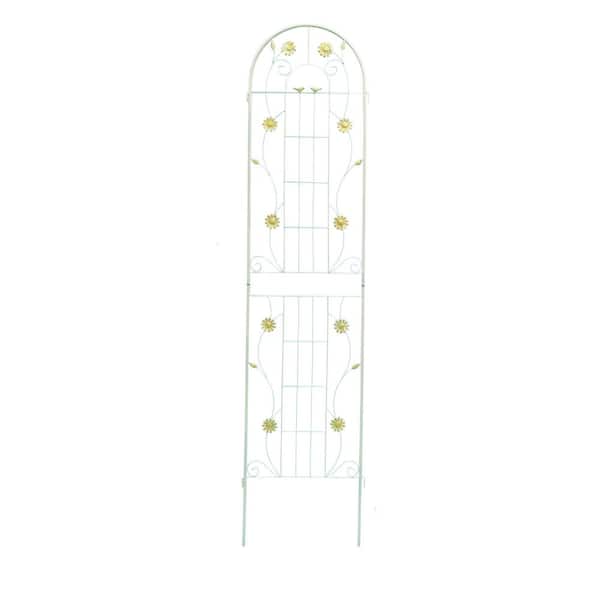
A white trellis can be an elegant addition to any garden or backyard. Not only does it provide aesthetic appeal, but it also serves an important functional purpose – supporting climbing plants and vines. In this article, we’ll explore the benefits of using a white trellis, the different types available, key considerations for selection and installation, and some of the best climbing plants to grow on them.
Why Choose a White Trellis?
There are several reasons why a white trellis is a great choice
-
Looks: A brightly colored plant life and flowers stand out against a white trellis, making your yard look stunning. The neutral color complements any garden style or color scheme.
-
Visibility: White makes the trellis visible, even in dense vegetation, so plants can find and latch onto it more easily.
-
Trellises made of vinyl, aluminum, or wood that has been painted or stained white last a long time and don’t get damaged by rain, sun, or snow.
-
White trellises come in a lot of different sizes and shapes so they can fit a lot of different spaces and climbing plants.
-
How much do they cost? Simple white lattice-style vinyl and wood trellises are low-cost options. All-weather structures made of resin or aluminum that are more complex cost more but last longer.
Popular Styles of White Trellises
There are many types of trellises to consider:
-
Lattice: Basic crisscross lattice is an inexpensive choice perfect for covering blank walls or fencing. Get flat panels or 3D cubes.
-
Arbor: Free-standing or leaning arbors with open slatted roofs allow you to walk through and are ideal for entryways.
-
Obelisk: Tall, narrow pointed structures add height and drama to gardens, especially suited for vines like pole beans.
-
Fan: Often semi-circular, fan trellises have spoke-like strips emanating from a central point for a beautiful visual statement.
-
Arch: Garden arches make stunning walkways for climbing roses or clematis. Single arches or series can create “hallways.”
-
Pyramid: Multi-sided pyramid shapes provide maximum support and growing area for prolific climbers.
Key Considerations When Choosing a White Trellis
Keep these tips in mind when selecting a trellis:
-
Size: Pick a trellis big and sturdy enough to support mature plant growth. Measure the area and opt for a design allowing at least 6 inches between plants.
-
Material: Vinyl, resin, wood, bamboo and metals like aluminum or steel each have pros and cons. Consider weather-resistance, maintenance and cost.
-
Design: Choose an open lattice or slat design to allow airflow and light penetration. Contemplate single vs. double sides and adjustable features.
-
Placement: Set up the trellis before planting to avoid root damage. Position it to avoid shading other plants as vines grow.
-
Mounting: For walls and fencing, look for trellises with pre-attached brackets. Freestanding styles require sturdy ground anchors.
Installation Tips for White Trellises
Proper installation ensures your trellis stands up to weather and thriving vines:
-
For freestanding trellises, dig holes 12-18 inches deep and insert metal or wood posts in concrete for stability.
-
Follow all manufacturer instructions carefully, especially for anchoring hardware.
-
Place the trellis where it will get full sun – at least 6 hours daily for most climbing plants.
-
Situate the trellis to avoid shading other plants as vines grow taller.
-
Allow ample space between the trellis and other structures so plants don’t cling where unwanted.
-
Consider adding mulch around the base to retain moisture and suppress weeds.
Great Climbing Plants for White Trellises
Here are some top options for climbing plants that will thrive on a white trellis:
-
Clematis: Showy, colorful flowers bloom abundantly on fast-growing clematis vines that attach with leaf stems. Provide cool roots and hot sun.
-
Climbing Roses: Varieties like ‘New Dawn’ and ‘Zephirine Drouhin’ offer recurring flowers on thorny canes needing 6+ hours of sun.
-
Grape Vines: Grow edible table grapes or ornamental varieties for bold foliage that changes color in fall. Full sun is needed.
-
Trumpet Vine: Vigorous trumpet vine blooms vibrant orange/red flowers from summer into fall but can spread aggressively.
-
Climbing Hydrangea: Clinging or aerial rootlets secure this vine with white lacecap flowers. Part sun to full shade suits it well.
-
Jasmine: Sweetly fragrant starry flowers perfume arbors and fences. Jasmine does best in warm zones with some afternoon shade.
-
Honeysuckle: Deliciously scented blooms on twining vines that attract hummingbirds and butterflies. Give it sun to light shade.
Bring Beauty and Purpose with a White Trellis
Adding a white trellis to your garden allows you to enjoy the beauty of climbing plants while also serving the critical function of lending structural support. Take time to consider the style, size, material and placement of a trellis before making a purchase. Proper installation and pairing with suitable climbing plants will ensure your trellis provides an elegant focal point. With a stunning white trellis as the backdrop, your colorful vines and flowers are sure to flourish.
White Climbing Iceberg Rose
White Climbing Iceberg Rose is an unpretentious, vigorous, and shade-tolerant variety. It is very disease-resistant.
| botanical name Rosa ‘Korbin’ |
| plant type Perennial |
| sun requirements Full sun |
| height 15 feet |
| hardiness zones 4-9 |
Climbing roses are a beautiful addition to any garden, and they offer many benefits that other types of roses do not. For one, they are very easy to care for and maintain.
Iceberg roses are also not very likely to get diseases, so you won’t have to worry about them getting sick and dying too soon. And, because they are climbers, they can add a lot of vertical interest to your space.
White Climbing Sweet Pea
White Climbing Sweet Pea prefers moist, fertilized, well-drained soil.
| botanical name Lathyrus odoratus |
| plant type Perennial |
| sun requirements Full sun to partial shade |
| height 2-6 feet |
| hardiness zones 2-10 |
Sweet pea is a fragrant and elegant flowering vine. It can be grown in a pot, on a porch, or in a garden, and it will bloom from early summer until fall. The flowers are fragrant, and they come in a variety of colors including white, pink, purple, and red.
The sweet pea plant is a member of the pea family. The flowers grow on a spiky stem that grows from their leaf axils.
Sweet pea is easy to grow from seed, and it will self-seed freely if given the opportunity.
White Coral Vine blooms with white flowers from late spring to early summer, attracting bees and butterflies.
| botanical name Antigonon leptopus |
| plant type Perennial |
| sun requirements Full to partial sun |
| height 30-40 feet |
| hardiness zones 8-11 |
The white coral vine is pretty and grows quickly, which makes it a great plant for covering the ground. It has pretty clusters of pink or white flowers that bloom from late spring to early summer, attracting bees and butterflies.
This plant is native to Mexico and South America, but it can be grown in many other parts of the world. Coral vine is drought-tolerant and can even grow in poor, sandy soil. It is also an invasive plant in many areas.
If you’re looking for a plant that will add interest to your yard, coral vine is a great choice. If you live in Florida, Texas, and Hawaii, opt for a different vining plant as this one is invasive in those areas.
Top 7 Flowering Vines for Fences, Arbors, and Trellises Enchanting Climbers
FAQ
What is the difference between a lattice and a trellis?
An trellis is a frame, usually made of metal or wood, that climbing plants use to climb up. A lattice is both a structure and a decorative screen or panel. It usually has a crisscross pattern of thin slats and is used for privacy, decoration, or as a background for plants.
What are the fastest growing climbing plants for trellis?
The fastest growing, super easy vine that will transform your trellises into lush green arches is Passiflower + bonus covered with tons of blue/purple passionflowers.
Is metal or wood trellis better?
Wood trellises are ideal for traditional, rustic, or cottage-style gardens and for gardeners who enjoy DIY projects and customisation. Metal trellises look great in modern gardens, hold heavy or quickly growing climbing plants, and are great for gardeners who want something that will last and not need much upkeep.
What is the best structure for climbing plants?
Use a trellis as part of an arch so that climbing plants can scramble over the top. An arbour has trellis on the sides for climbing plants and an arched or flat top.