
Complementing a Red Brick House With Black Mulch Landscaping
A red brick house is a timeless and charming architectural style that brings warmth, character and classic curb appeal to any property. However, finding the right landscaping to accentuate the rich red brick exterior can be tricky. You want an option that will enhance the visual interest of your home without clashing with the bold brickwork. One elegant yet understated solution is to use black mulch in the garden beds surrounding your red brick house
Why Black Mulch Works Well With Red Brick Houses
Black mulch has a sophisticated, sleek look that pairs beautifully with the traditional red brick facade. Here are some specific reasons why black mulch is an ideal choice:
Color Contrast: The bright red brick stands out against the dark black mulch, making both components stand out. This contrast adds great visual interest.
Uniformity – Unlike bark mulches with varied textures and wood chips in different shades, black mulch has a uniform jet black color and fine texture. This monochromatic look gives a clean, cohesive aesthetic.
Definition – Black mulch helps define and outline the landscape beds, providing structure and emphasizing the shape and contours of the garden.
Focal Point: If you have a big red brick house, you want the architecture to stand out. Black mulch frames the home without competing for attention.
Versatility – Black goes with everything! It coordinates seamlessly with any plant colors and hardscape materials. You can’t go wrong with basic black.
Sophistication – The color black evokes luxury, class and timeless style. Paired with traditional architecture, black mulch exudes elegance.
Types of Black Mulch for Red Brick Houses
If you want to add depth and darkness to your red brick house with mulch, here are some options for you to think about:
Rubber Mulch – Made from recycled tires, this mulch has an extremely dark black color that will pop against red brick. Rubber mulch is also useful for play areas since it cushions falls. The downside is that it can be more expensive and the color fades over time, requiring frequent replenishment.
Dyed Mulch: To get the color you want, natural mulches like pine bark are dyed black. They come in black, deep black, and jet black shades. The color will slowly fade over the course of a year, so plan to either reapply the dye or take out and replace the mulch every year.
Colored Wood Mulch – Specially processed hardwood mulch is used to create a rich black colored wood mulch. It retains its deep black tone for 1-2 years without excessive fading. Eco-friendly biodegradable dyes color the mulch during processing.
Cypress Mulch – Cypress trees native to wetland swamps naturally produce a wood that turns a very dark gray-black when aged. Shredded cypress mulch has an extremely dark charcoal hue without using dyes.
Black Lava Rock – For a more contemporary, minimalist look use small black lava rock. The irregular shapes and texture provide visual interest. It won’t fade but retains and radiates heat so may not be suitable for all climates.
Black Gravel – Gravel offers a crisper contrast against the organic brick texture and is great for xeriscaping. Use pea gravel or crushed granite in black for modern appeal. The dark color comes from mined stone, not dye.
Design Tips for Incorporating Black Mulch
When integrating black mulch into your red brick house landscape, follow these design tips:
-
Use black mulch consistently in all visible garden bed areas near the home to unify the look.
-
Outline beds and tree rings with 2-4 inch deep bands of mulch. Crisp edges make the color pop.
-
Widen mulch beds if plantings are sparse to emphasize color, avoiding large bare soil expanses.
-
Add contrasting bright garden features like trellises, furnishings and containers to prevent an overly dark look.
-
Include light colored plants and flowers to balance the mulch darkness.
-
Use mulch to define the front entry path and continue it alongside the house.
-
Accent the front entry with container gardens rimmed with black mulch.
-
Apply black gravel mulch to driveways and walkways to extend the mulch theme into hardscapes.
With the right details, black mulch can feel softly elegant instead of gloomy. Balance the deep color with lighter elements and elevate the overall design.
Plant Selection for Black Mulch and Red Brick
Choosing complementary plants is key to making the black mulch and red brick color scheme work seamlessly. Include a mix of foliage colors and textures to create depth and contrast. Some ideal plant options include:
Flowers: Impatiens, petunias, salvias, marigolds, zinnias, cosmos, geraniums, pansies, daisies
Shrubs: Abelia, spirea, hydrangea, lilac, butterfly bush, azalea, viburnum
Ornamental Grasses: Pennisetum, carex, miscanthus
Groundcovers: Lamium, ivy, liriope, creeping Jenny, vinca
Ferns: Autumn fern, tassel fern, Japanese painted fern
Foliage Plants: Caladium, coleus, coral bells, hosta, artemisia, heuchera
Avoid pale pastels and opt instead for saturated brights like crimson, magenta, violet and citrus yellows. Foliage in purple, burgundy and deep forest greens also complements black mulch beautifully against red brick.
Maintaining Black Mulch Around a Red Brick House
Follow these tips to keep black mulch looking fresh:
-
Inspect beds monthly, raking mulch back into place if displaced.
-
Replenish mulch annually in spring, typically 1-2 inches deep.
-
Monitor faded blacks and re-dye or replace when color loss is excessive.
-
Use edging between mulch beds and lawns to prevent grass and weeds.
-
Weed regularly to prevent unwanted plants from sprouting in the mulch.
-
In dry periods, water beds to keep mulch slightly moist and prevent floating.
-
Test pH yearly as acidic mulch can lower soil pH over time.
-
Promptly clean spilled mulch on hardscapes to prevent staining.
With periodic care, black mulch can retain its dramatic color and keep your red brick house looking its best for years. The striking contrast and cohesive look is worth the minor upkeep required. For instant curb appeal, pair classic red brick with chic black mulch.

Reasons for Using Mulch
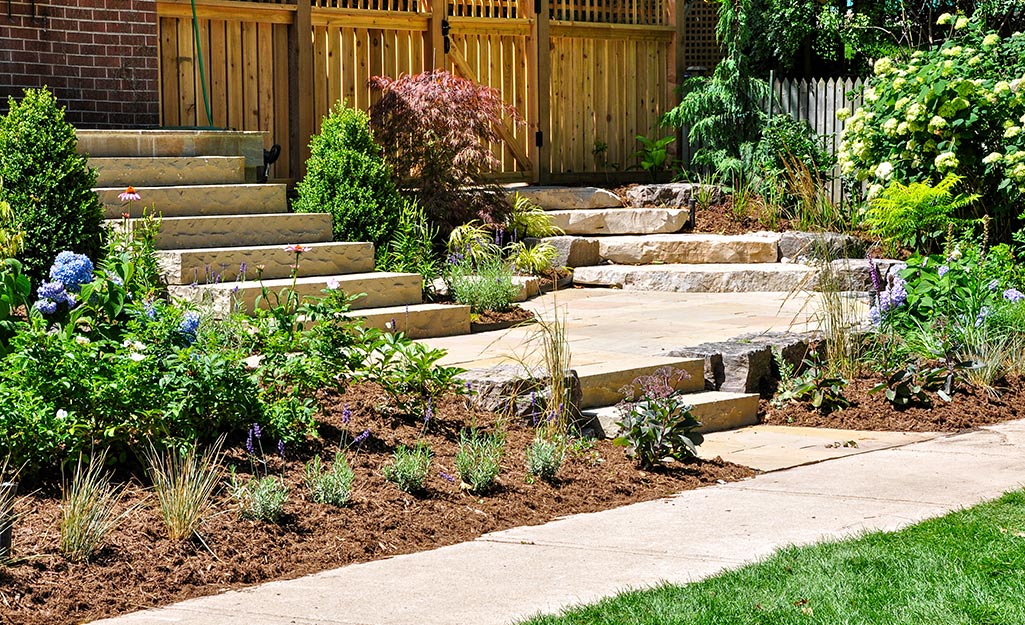
Mulch performs several functions in a garden:
- It helps plants get established and grow by increasing the survival rate of seedlings and improving the growth of root systems and seeds.
- It improves soil moisture and nutrition.
- It maintains optimal soil temperature.
- It cuts down on soil loss, compaction, weeds, pesticide use, salt and pesticide pollution, and pollution of watersheds.
- It makes garden beds and areas with a lot of foot traffic look better overall.
Use mulch on garden beds as a top dressing or on high-traffic areas where the lawn or ground is often soggy. Mulch helps absorb moisture and provide a nice walking path.
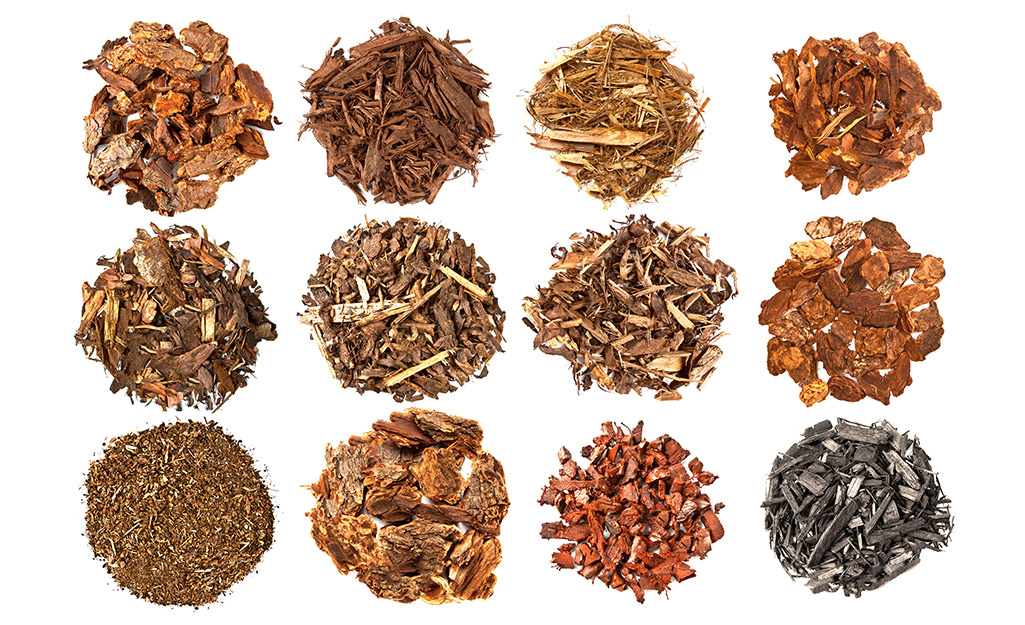
Mulch is available in a variety of compositions and sizes:
- A medium-strength mulch made from woods like cedar and pine is called bark mulch. Bark mulch interlocks so it won’t wash away. It’s ideal for gardens on a slope or walkways. Over time, it breaks down into the soil, which is good for the health of your garden.
- If you have a flat garden, bark nuggets are a good choice because mulch is less likely to wash away. Because they are big and chunky, bark nuggets don’t break down as fast as pine straw or bark mulch. You won’t have to reapply this product as often, which will save you time and money.
- For paths and slopes, pine straw needles work great because they stay put and don’t break down quickly.
Bark mulch and bark nuggets are available in a variety of colors. Mulch that hasn’t been color treated is more prone to fading than color-treated mulch.
Tip: You can make mulch from dry shredded leaves and grass, but don’t use chemically treated grass clippings, especially around your planted edibles.
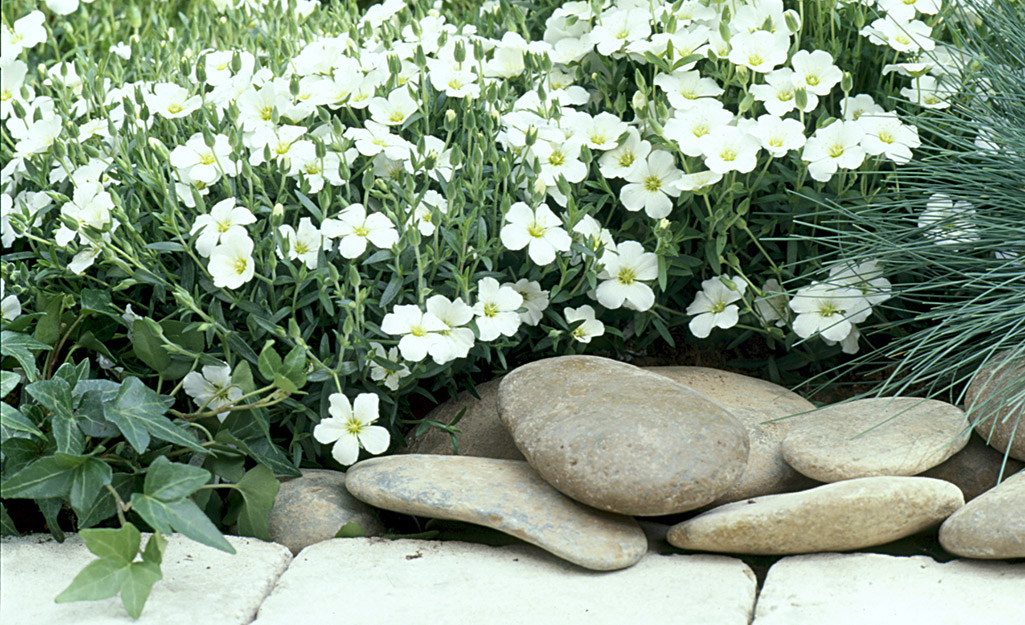
In areas of your garden where you don’t need to enrich the soil but still want ground cover, try one of these:
- Landscape rocks that don’t break down are pea gravel, river rocks, and marble chips. Lay them down once and clean them up as needed instead of once a year. They look great in dry places or as garden borders. There are many shapes and colors of landscape rocks to choose from. But it’s hard to get rid of them if you change your mind.
- There are many colors of rubber mulch, and it is a good choice for a safe surface. Use it under play structures and play areas. Rubber mulch, which is mostly made from old tires, is a soft place to land when you do slip and fall. This mulch maintains its color and doesn’t decompose. Put up a wood, brick, or edging border around it to keep it from spreading to nearby lawns, gardens, or watersheds.
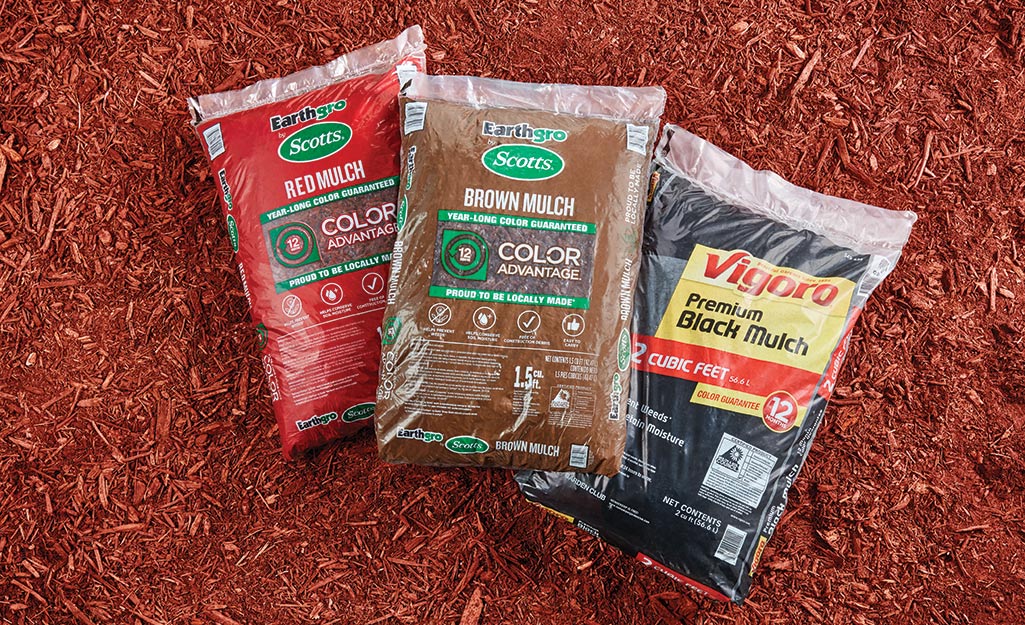
For mulch that will go with your flowers, pick a color that works with your blooms.
White and yellow flowers look beautiful with red mulch. Purple flowers conflict with red mulch but look stunning against black and brown mulch. If youre growing plants with dark foliage, almost any mulch color will provide a nice contrast and help make the plants stand out.
To match a mulch color to your home, consider the style and materials used in its construction.
- Red brick can look softer with brown mulch, and sharp, squared edges will look even better with black mulch.
- Light-colored siding, like white, cream, or pale blue, can look flat if you use red mulch around the base of the house. A color scheme of gold and warm tones looks great with red mulch.
- When you put black mulch around green plants like hosta and sweet potato vine, the colors really stand out. For gray and contemporary homes, use black mulch.
Your red brick house is ugly, and here’s how you can fix it! #diy
FAQ
Does black mulch look good with red brick?
What color mulch to use with red brick depends on your goals and personal preferences. White lava rock will make the red brick and lush green landscaping stand out, while black mulch is unique and goes well with them.
Does black go with red brick?
Using black paint and other dark colors, a timeless red brick exterior can feel really modern and fresh. The black paint color provides a beautiful contrast that makes the red brick glow.
When not to use black mulch?
Even if you use a safe black much, many plants will still have trouble with the heat. For this reason, only use black mulch around well-established plants with deep roots that are less likely to be killed by the additional heat that the dyed mulch will retain. Never use it around newly installed plants.
What color plants go with red brick houses?
Hot colors–oranges, yellows, scarlet–are naturals against brick, as are the more mellow peach-pinks and soft yellows. Violet-blue flowers or burgundy leaves make good accents. Avoid cool purple-reds and lavender-pinks because they may clash with brick.